Lesson 3: Pride Versus Humility
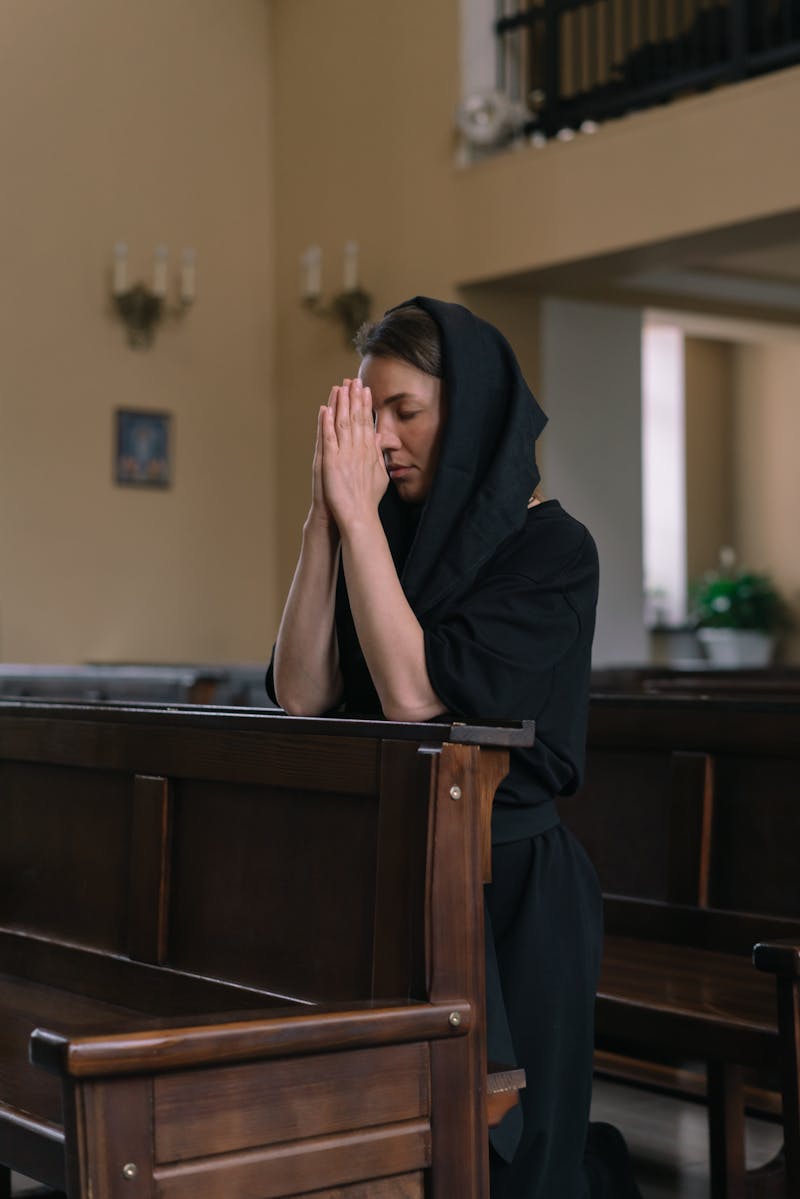 Photo: Pexels
Q2 2026 - Growing in a Relationship With God April 11–17, 2026
Memory Text
“For whoever exalts himself will be humbled, and he who humbles himself will be exalted.” (Luke 14:11, NKJV)
Key Passages This Week
- 1 John 2:15-17 — The world, the flesh, and pride
- Luke 18:9-14 — The Pharisee and the tax collector
- 1 John 1:9 — Confession and cleansing
- Hebrews 11:24-26 — Moses’ choice
- Luke 22:24-27 — The disciples’ dispute about greatness
- Philippians 2:3-8 — The mind of Christ
Central Theme
Pride is not just a character flaw — it is the primal sin. It originated in Lucifer, the closest created being to God, and has infected every human heart since. The lesson’s core argument: we cannot grow in relationship with God while pride occupies the throne of self. The remedy is not willpower or self-improvement, but a sustained gaze at Christ — in whose presence pride cannot survive. True humility isn’t manufactured; it’s a byproduct of proximity to Jesus.
Theological Framework
1. The Origin and Nature of Pride
Pride began not with humans but with Lucifer (Isa. 14:12-14; Ezek. 28:12-17). This is significant: pride arose in a being of extraordinary beauty, wisdom, and privilege — in the immediate presence of God. This means no one is immune. Pride is not primarily about obvious arrogance; it is the displacement of God from the center of one’s life and replacing Him with self. The Pharisee in Luke 18 was devout, moral, and sincere — and utterly lost. His prayer wasn’t addressed to God; it was a monologue of self-congratulation directed toward God.
Hermeneutical note on 1 John 2:15-17: The “love of the Father” and the “love of the world” are presented as mutually exclusive (v.15). John’s word for “world” (kosmos) here doesn’t mean creation but the fallen system organized around self-gratification. The three expressions — “lust of the flesh, lust of the eyes, pride of life” — deliberately echo Genesis 3:6 (Eve saw it was “good for food… pleasant to the eyes… desirable to make one wise”). Pride (alazoneia) means boastful reliance on one’s own resources. It is the root system from which the other two grow.
2. Self-Knowledge as Spiritual Prerequisite
Luke 18:9-14 is one of Jesus’ sharpest parables. The Pharisee’s prayer is technically accurate — he did fast twice a week and tithe everything. His failure isn’t lying; it’s using accurate facts to construct a false comparison. The tax collector, by contrast, doesn’t defend himself, compare himself, or even name his specific sins. He simply presents himself — wretched, broken, pleading.
Theological tension: EGW says “it is only he who knows himself to be a sinner that Christ can save.” But how do we come to genuine self-knowledge without collapsing into morbid introspection? Her answer: “It is ignorance of [Christ] that makes men so uplifted in their own righteousness.” Self-knowledge isn’t achieved by looking inward harder — it comes as a consequence of beholding Christ. The greater our vision of His holiness, the clearer our picture of ourselves.
3. Moses: Pride Broken, Usefulness Multiplied
Hebrews 11:24-26 identifies Moses’ choice as faith-based: “esteeming the reproach of Christ greater riches than the treasures in Egypt.” But the choice alone didn’t make Moses humble — his impulsive murder of the Egyptian (Exod. 2:12) shattered his self-sufficiency. Forty years in Midian weren’t wasted years; they were the classroom where God dismantled the pride that Egyptian education had built. Numbers 12:3 calls him “very humble, more than all men on the face of the earth” — a remarkable statement about a man who had once been royalty.
Key insight: God frequently uses failure, obscurity, and apparent waste to do His deepest character work. The burning bush came after 40 years of obscurity, not before. Pride disqualifies; humility qualifies.
4. The Disciples’ Dispute — Pride at the Last Supper
Luke 22:24 is one of the most sobering verses in the Gospels: the disciples were arguing about who was greatest at the Last Supper — while Jesus was hours from the cross. They had watched three years of ministry, witnessed miracles, heard the Sermon on the Mount — and still pride surfaced at the most sacred moment. This tells us: proximity to Jesus does not automatically produce humility. The disciples were close to Christ physically but still measured greatness by the world’s metrics. Jesus’ response (v.26-27) inverts the entire power structure: the greatest is the one who serves, and He Himself is the servant. He washed their feet that same night (John 13).
5. The Philippians 2 Kenosis
Philippians 2:3-8 is one of the highest Christological passages in the NT, and Paul deploys it as an ethical argument, not primarily a theological one. “Let this mind be in you which was also in Christ Jesus” (v.5) — the voluntary self-emptying (kenosis) of the Son of God is the pattern for human humility. He didn’t grasp equality with God as something to exploit; He released it for our sake. The One who had the most reason for pride had none. The implication: all human pride is exposed as absurd in the shadow of Calvary.
Deep Discussion Questions
On the Nature of Pride
-
Pride’s camouflage: The Pharisee in Luke 18 was by most external measures a model believer — disciplined, generous, faithful. How does religious faithfulness enable pride rather than prevent it? What does “spiritual pride” look like in your own life, and why is it harder to detect than ordinary pride?
-
Positive vs. sinful pride: The lesson distinguishes between appropriate self-appreciation (God-given gifts, achievement) and sinful pride. Where exactly is the line? Can you think of a real example where healthy confidence crossed into pride? What was the indicator?
-
1 John 2:15-17 — “Pride of life”: The Greek alazoneia (boastful reliance on one’s own resources) appears here and in James 4:13-16 (the merchant who makes plans without God). In our culture of self-reliance, achievement, and personal branding — how does this specific form of pride manifest? Is it possible to live in the modern Western world and not be shaped by it?
-
Pride’s cosmic origin: Isaiah 14 and Ezekiel 28 trace pride to Lucifer’s desire to “be like the Most High.” EGW calls it “the most hopeless, the most incurable” of sins. Why is pride uniquely resistant to correction? Why does rebuking pride often make it worse?
On Self-Knowledge
-
The Pharisee’s blind spot: His prayer contains accurate facts but produces false conclusions. How do we guard against using our own genuine faithfulness (church attendance, giving, service) as evidence of spiritual superiority? What would the tax collector’s prayer look like in your life today, in your own words?
-
Self-knowledge via Christ: EGW argues that true self-knowledge comes from beholding Christ, not introspection. Do you find that to be true experientially? What specific encounters with Christ have produced the deepest honest self-assessment for you?
-
1 John 1:9 and recurring sin: Confession is the prescribed response to sin — but what about patterns we confess repeatedly without apparent change? Does repeated confession of the same sin indicate a lack of genuine repentance, or is it part of the sanctification process? How does pride intertwine with our reluctance to confess persistently?
On Moses
-
Failure as formation: Moses killed a man, fled in disgrace, and spent 40 years in obscurity before God used him. What does this suggest about how God qualifies people for significant roles? Can you think of parallel patterns in your own life or in someone you know?
-
Humility under pressure: Consider how Moses’ leadership would have differed if pride had driven each key moment — the burning bush, the Red Sea, receiving the commandments. Pick one and trace concretely how pride would have changed the outcome. Then apply the same thought experiment to a leadership challenge in your own life.
-
Numbers 12:3: Moses is called “the most humble man on the face of the earth” — yet he also struck the rock in anger (Num. 20), an act God took very seriously. What does this tell us about the tension between growing humility and ongoing failure? Does one catastrophic proud act negate a lifetime of humility?
On Christ as the Pattern
-
The Last Supper argument: The disciples argued about greatness while Jesus prepared to go to the cross. Where do you see equivalent disconnects in the church today — where Christians debate status, position, or recognition while the mission around them is urgent?
-
Philippians 2 ethics: Paul uses the kenosis of Christ as the ethical model for human relationships (v.3-4, “in lowliness of mind, let each esteem others better than himself”). What would this look like in a specific relationship where you currently find it difficult? Does “esteeming others better than yourself” require you to think less of yourself — or something else entirely?
-
“The One who serves” (Luke 22:27): Jesus defines greatness as servanthood. In your Sabbath School class, your church, your workplace — what would it look like to apply this definition this week? Is there a specific act of service you’ve been avoiding because it feels beneath you?
On Application and Corporate Dimensions
-
Institutional pride: The lesson focuses on personal pride. But churches, denominations, and cultures can also be prideful. What does institutional or denominational pride look like in Adventism? What would corporate humility look like?
-
“God resists the proud” (1 Peter 5:5): The Creator actively opposing the creature — can you think of examples, personally or historically, where you’ve witnessed this? What did it look like?
-
Pride and evangelism: How does the pride of those outside the church (“I don’t need God”) affect our approach to sharing faith? And how does our pride affect our witness? What does humble evangelism actually look like in practice?
-
The post-Christian professional: People shaped by Western culture deeply value independence and self-sufficiency. In what ways is pride specifically a barrier for this demographic? And ironically — in what ways might our own pride be a barrier to reaching them?
Ellen White Integration
On the Source of Self-Knowledge
“The closer we come to Jesus and the more clearly we discern the purity of His character, the more clearly we shall discern the exceeding sinfulness of sin and the less we shall feel like exalting ourselves.” (Christ’s Object Lessons, p. 160)
Discussion use: This inverts the typical self-improvement approach. We don’t get better and then approach God; we approach God and discover how much we need to get better. Ask the group: what is your current “lens” for self-assessment — comparison to others? compliance with rules? Or proximity to Christ?
On Pride’s Danger
“There is nothing so offensive to God or so dangerous to the human soul as pride and self-sufficiency. Of all sins it is the most hopeless, the most incurable.” (Christ’s Object Lessons, p. 154)
Discussion use: “Most hopeless, most incurable” is striking language. Pride resists the help it needs — it is self-sealing. How does this affect how we pray for proud people? How do we handle it when we recognize it in ourselves?
On the Prayer of Surrender
“Lord, take my heart; for I cannot give it. It is Thy property. Keep it pure, for I cannot keep it for Thee. Save me in spite of myself, my weak, unchristlike self.” (Christ’s Object Lessons, p. 159)
Discussion use: Note what this prayer admits — not just that I haven’t surrendered my heart, but that I cannot give it unaided. This is a profound theological statement about human inability. How does this shift the spiritual life from effort to dependence?
Practical Application
Personal
- Pray the tax collector’s prayer daily this week — not the elegant version, the desperate one: “God, be merciful to me, a sinner.” Notice what it does to your posture in other conversations.
- Identify one relationship where you tend to position yourself as superior — in knowledge, spirituality, or achievement. Choose one concrete act of service or deference this week in that relationship.
- Write out Psalm 138 word for word (the lesson’s Thursday suggestion). As you write, notice the verbs — what God does vs. what the psalmist does. Notice the proportion.
For Class Discussion
- Opening: Ask the group to silently complete the sentence: “One area of my life where pride is hardest to admit is ___.” No need to share — just sit with it. Then open with the Pharisee/tax collector parable.
- Closing challenge: What would change in one specific relationship this week if you genuinely operated from Philippians 2:3 — “in lowliness of mind, let each esteem others better than himself”?
Closing Reflection
The irony of this lesson: the more carefully we study pride, the more likely we are to feel subtle satisfaction at how well we understand it — which is itself pride. The antidote is not more self-analysis but more Christ. The tax collector didn’t come to the temple with a carefully prepared self-assessment; he came with his face to the floor. And he went home justified.
The disciples argued about greatness and went home with washed feet. Moses chose obscurity and became the humblest man on earth. Christ emptied Himself and received the name above every name.
The pattern is consistent: the path down is the path up. Not as technique. Not as strategy. But as the natural outcome of understanding what happened at Calvary.
“He who humbles himself will be exalted.” (Luke 14:11)
| *Q2 2026 — Growing in a Relationship With God | Lesson 3 | April 11–17, 2026* |